
Someone Stole My Tweet! 😡 Your No-BS Guide to Copyright, DMCA, and Keeping Your X Content Safe
Ever had that gut-punch feeling?
You’re scrolling through Instagram or LinkedIn, minding your own business, when BAM. There it is. Your viral tweet. Your brilliantly crafted thread. Your perfect meme. Sitting on someone else’s page, racking up likes and credits that rightfully belong to you.
I have. A tweet I spent a solid hour workshopping—a funny observation about my dog’s weird obsession with the dishwasher—was lifted by a meme account with 2 million followers. No credit. No tag. Just pure, unadulterated content theft. I felt a mix of rage, violation, and helplessness. Sound familiar?
You poured your creativity, time, and brainpower into that content. In the digital wild west, especially on a fast-paced platform like X (formerly Twitter), having your work stolen isn’t a matter of if, but when. So, let’s arm you with the knowledge to fight back. This is your street-smart guide to copyright, DMCA notices, and making thieves think twice.
First Things First: Do You Even Own Your Tweet?
This is the big question, right? When you hit “Post,” does that little thought bubble belong to you or to Lord Elon?
Here’s the deal: Yes, you do. According to X’s own Terms of Service, “You retain your rights to any Content you submit, post or display on or through the Services.” Translation: You own your original words and images. X just gets a license to show it off on their platform.
But—and it’s a big but—there’s a catch. Your short, off-the-cuff phrase like “Ugh, Monday again” probably isn’t copyrightable. Copyright protects original works of authorship fixed in a tangible medium. A long-form thread with unique insights, a detailed illustration you posted, or a carefully composed photograph? That’s absolutely protected.
The Digital Knock on the Door: Demystifying the DMCA Takedown
The DMCA (Digital Millennium Copyright Act) is your best friend here. It’s not a scary legal monster; it’s basically a process that allows you, the copyright holder, to tell a platform, “Hey, someone over there is hosting my stolen stuff. Please take it down.”
Filing a DMCA notice with X is simpler than you think. You don’t need a lawyer (for most cases). You just need to be the rightful owner and provide the right information.
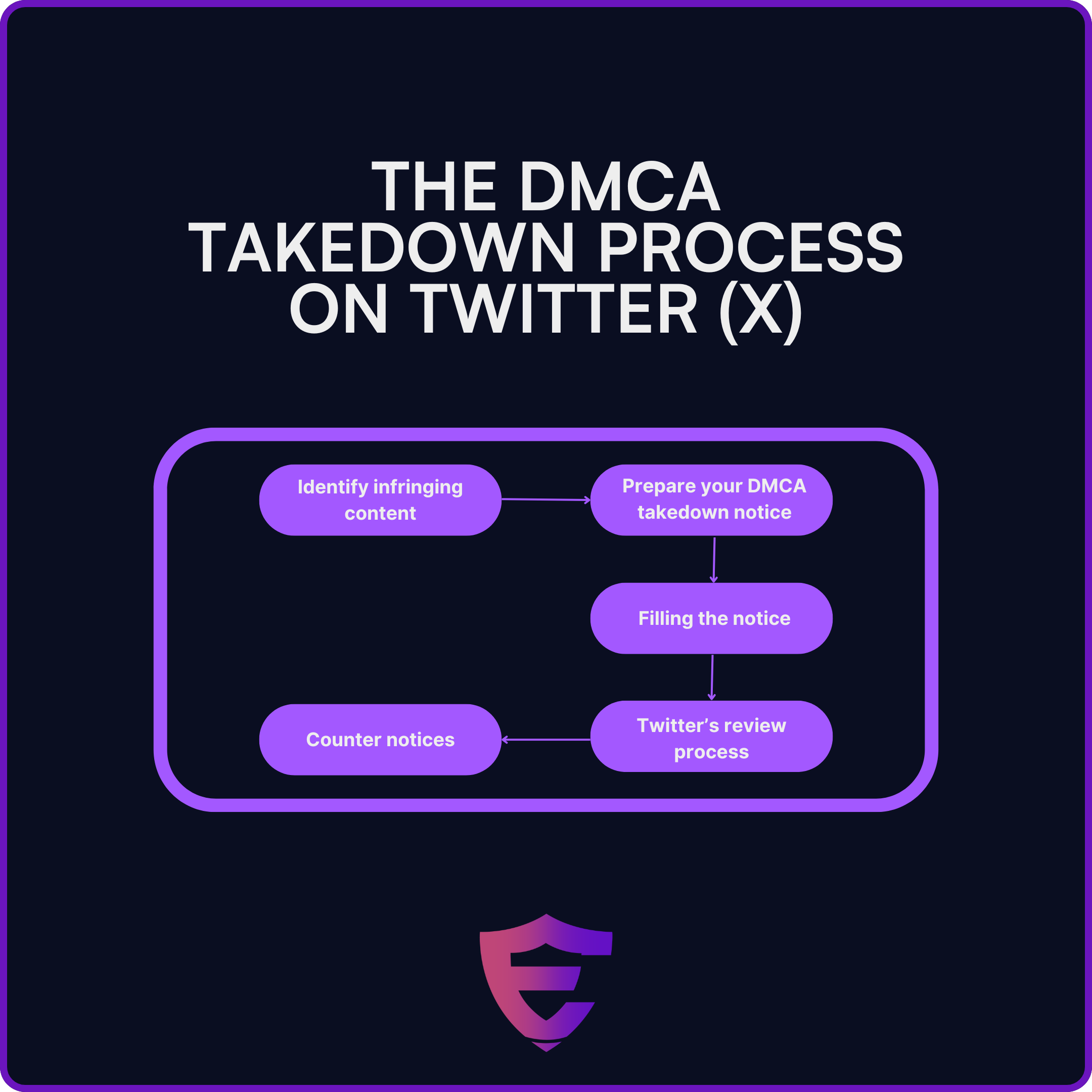
Here’s a breakdown of the process from your complaint to the outcome:
flowchart TD
A[You Discover<br>Content Theft] --> B[Prepare DMCA Notice<br>Your Info, Their Info,<br>& Statement of Good Faith]
B --> C[Submit Notice via<br>X's Help Center Form]
C --> D{X's Trust & Safety<br>Team Reviews}

D --✅ Valid & Complete --> E[Content Removed]
E --> F[Offender's Account<br>Struck & May Be Suspended]

D --❌ Invalid or Incomplete --> G[Notice Rejected]
G --> H[You Can Refile<br>with Corrections]

F --> I[Offender Can<br>File a Counter-Notice]
I --> J[You are Notified]
J --> K[You Have 10 Days<br>to Initiate Legal Action]
K --✅ You Sue --> L[Content Stays Down]
K --❌ No Action --> M[Content Restored]
As the chart shows, the offender can file a counter-notice. If they do, X will let you know. To keep the content down, you then have 10 business days to provide proof that you’ve initiated a court action against them. This is where most personal claims stop, as suing someone across state or international borders is complex and expensive. But for the vast majority of clear-cut theft cases, the initial takedown is enough.
An Ounce of Prevention: How to Watermark Like a Pro
Filing DMCA notices works, but it’s reactive. It’s like mopping up the floor while the sink overflows. Why not turn off the tap? Making your content harder to steal is the ultimate power move.

“But won’t a ugly watermark ruin my aesthetic?” I hear you. It doesn’t have to. Prevention is about subtle branding.
| Method | How to Do It | Pro Tip |
|---|---|---|
| Integrated Text | Weave your @handle directly into the image or the first line of a text-based graphic. | Use a semi-transparent font in a corner. It’s harder to crop out without ruining the image. |
| Visual Style | Develop a unique, recognizable style for your graphics—a specific color palette, font, or layout. | Thieves can’t easily replicate your style. It becomes your signature. |
| The “Signature” Move | For artists and photographers, a small, stylish signature in your work is a classic, effective deterrent. | Place it where it would be obvious if removed, like across a key part of the image (but not the focus). |
I started adding a subtle @myhandle in the bottom right of my quote-style graphics. The result? My traffic from Instagram skyrocketed because even when people shared it, my name was attached. Theft became free marketing.
To Fight or Not to Fight? A Real Talk Conclusion
Seeing your work stolen is infuriating. It’s a personal violation. But before you go full John Wick on every copycat, ask yourself:
-
Is this worth my energy? Is the account big? Is the post getting significant engagement that diverts real value from me?
-
Is it fair use? Is the account critiquing, parodying, or transforming your work? This is a complex legal area, but sometimes sharing isn’t stealing.
-
Would a simple call-out work? Sometimes a public comment like, “Hey, glad you loved this! Would appreciate a credit next time 😊” can be effective and make you look gracious.
Your creativity has value. Whether you choose to formally enforce your rights with a DMCA or simply focus on making your content too branded to steal, the power is in your hands. Don’t let the fear of theft stop you from creating. Just create smarter.
Now I want to hear from you! Have you ever had your content lifted? How did you handle it? Share your stories (and your favorite watermarking apps!) in the comments below! Let’s learn from each other.
Sources & Further Reading:
-
The official X Privacy Policy section on copyright.
-
A fantastic, plain-English breakdown of DMCA procedures from a service provider.
-
The U.S. Copyright Office’s circular on fair use, for when you’re ready to dive into the deep end.
You should also read these…
- spyfrogs.com – build an internal ai policy in one afternoon data
- spyfrogs.com – something went wrong error causes and step by step
- surgeblog.com – too many ads on tiktok is there a fix
- toojet.com – home detox practices that dont require supplements
- godwig.com – the guide to turning chores into fun
- olddry.com – lightweight flexibility using durpack in shoe and
- closedad.com – using a spinner wheel to enhance online learning
- tugmen.com – diy natural lip balm with simple ingredients
- sixrep.com – black screen error in games causes and solutions
- soturk.com – account security and privacy problems and solving