
Quick Acrylic Pour Painting Projects for Beginners 🎨
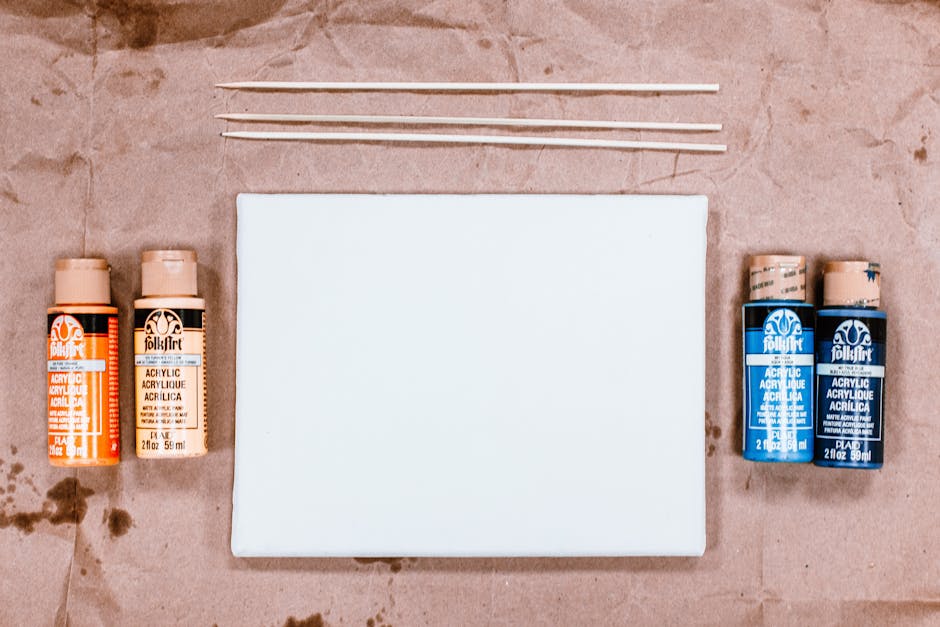
Hey there, art enthusiast! 🙋♂️ I’m glad you found your way here. If you’ve been thinking about diving into the vibrant world of acrylic pour painting, you’re in the right place. In this blog post, we’ll cover some quick and easy projects you can start with along with some helpful tips and tricks. So, let’s get started, shall we? 😉
What is Acrylic Pour Painting? 🧐
Acrylic pour painting is a fun and interesting form of abstract art. It’s all about pouring acrylic paint onto a canvas and letting it spread to create unique, mesmerizing patterns. No brushes or artistry skills required – just your creativity and passion! You can learn more about it.
Project 1: Simple Pour 🌈
Start your journey with a simple pour. All you need is a canvas, acrylic paints in your favorite colors, and a pouring medium. Once you’ve prepared your colors, pour them onto the canvas one after the other, and then tilt the canvas to spread the paint. It’s that easy! 😃
Project 2: Swipe Technique 🏄♀️
Want to add a bit more excitement to your painting? Try the swipe technique. After pouring your colors, take a spatula or a piece of cardboard, and smoothly swipe over the colors. This will create beautiful cells and lacing in your painting. You can check out a detailed tutorial.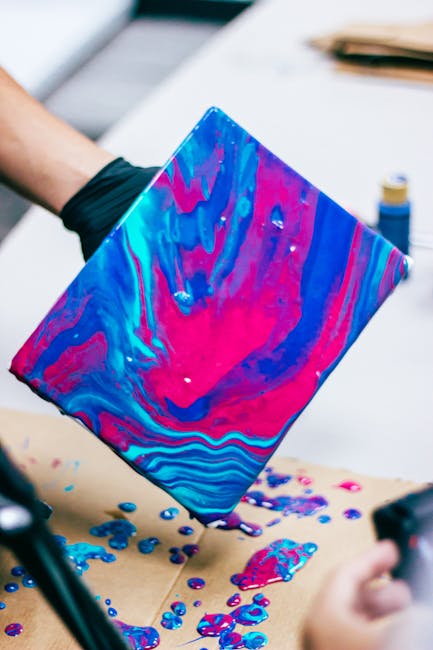
Project 3: Dirty Pour 🎇
Feeling more adventurous? Go for a dirty pour. In this method, instead of pouring colors separately, you pour them all into one cup and then pour that onto the canvas. The resulting patterns are truly breathtaking. 😍
Comparisons and Insights 📊
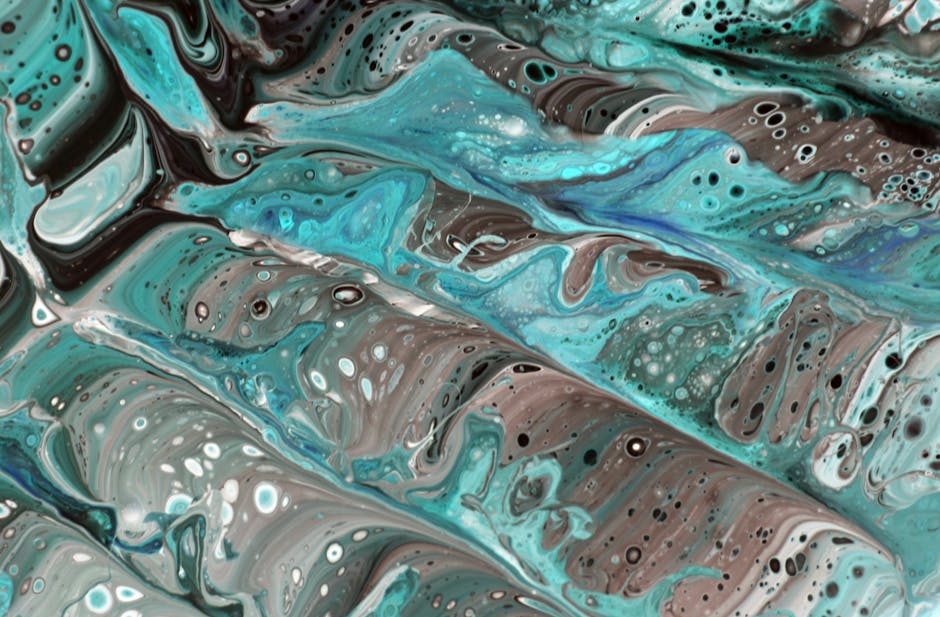
By now, you might be wondering which method is better. Well, each method has its own charm and can produce different results. The simple pour is great for beginners and offers a lot of control. The swipe technique adds complexity and can create stunning effects. The dirty pour, though a bit unpredictable, can result in the most astonishing patterns. Ultimately, the choice depends on your personal preference and the effect you’re going for. 🎯
| Technique | Difficulty Level | Control | Effect |
|---|---|---|---|
| Simple Pour | Easy | High | Smooth, Layered Colors |
| Swipe | Intermediate | Medium | Cells, Lacing |
| Dirty Pour | Advanced | Low | Complex Patterns |
Conclusion 🎉
And that’s it, folks! I hope this post has sparked your interest in acrylic pour painting. Remember, the most important thing is to have fun and let your creativity flow. So, grab your paints and let’s get pouring! 🎨🥳
You should also read these…
- toojet.com – say goodbye to dinner indecision flavor adventures
- noepic.com – common mistakes by tiktok brand accounts
- getaluck.com – how to stay motivated when you telecommute
- toojet.com – text not adding on tiktok videos
- surgeblog.com – decoding luxury fabric names vicuna guanaco qiviut
- olddry.com – top 5 icebreaker activities using a digital spinne
- spyfrogs.com – device not compatible error on older phones
- godwig.com – funniest spin the wheel dares to play with friends
- noepic.com – preparing for behavioral interviews with practice
- getaluck.com – join our legacy of quality ozcihans transmission s